
An escalation call occurs when a customer service issue is transferred to a higher-level agent or supervisor for resolution. Escalation ensures complex, urgent, or high-priority issues are handled effectively, improving resolution time, customer satisfaction, and operational efficiency. Proper processes and training maximize the benefits of escalation calls. If you’ve ever been on a customer service call and felt your issue wasn’t being resolved, the term escalation call might come to mind. So, what is an escalation call?
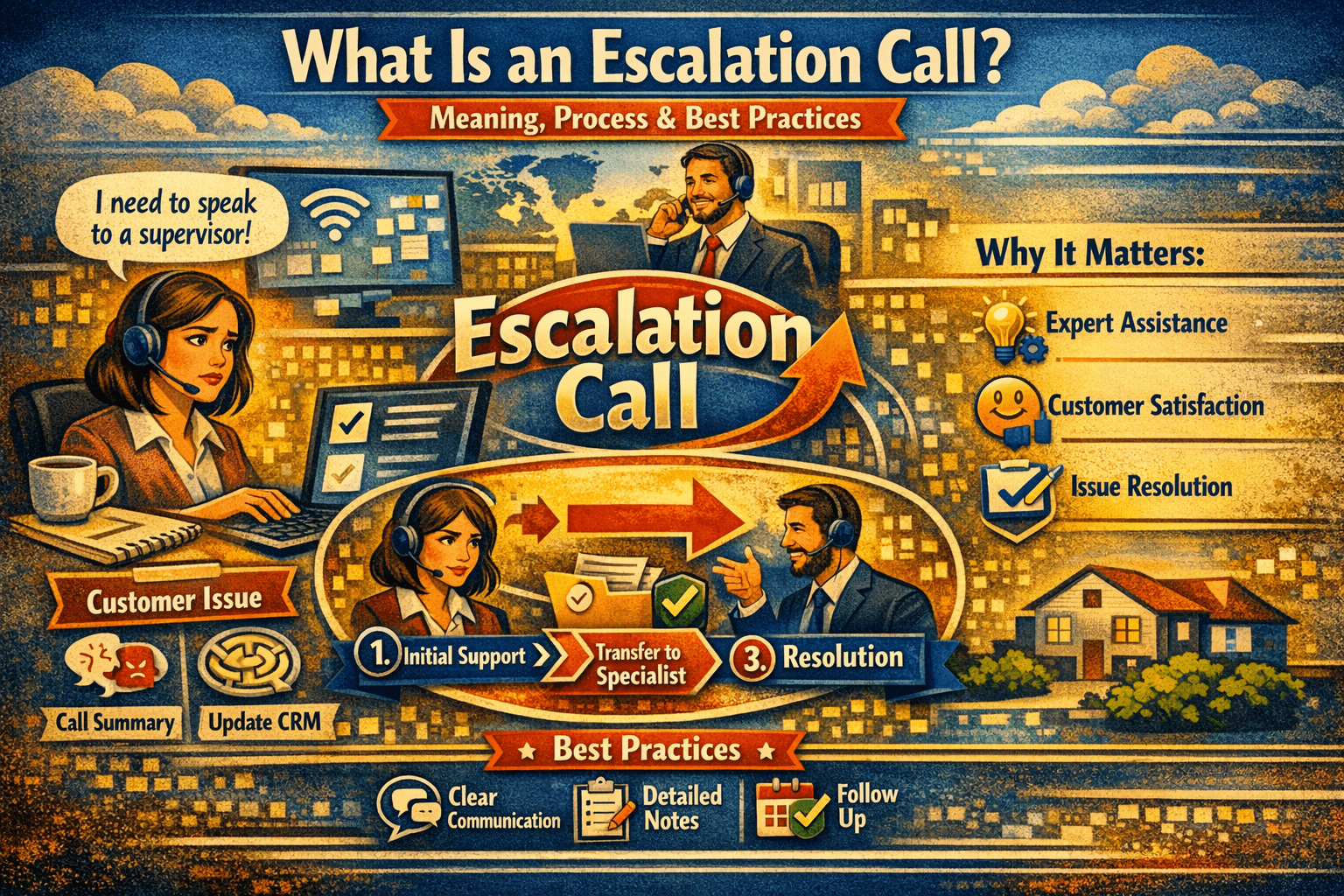
An escalation call occurs when a customer’s issue is transferred from a frontline agent to a higher-level support person or manager for resolution. Escalation ensures complex or urgent problems are addressed efficiently and improves customer satisfaction, accountability, and service quality.
In this article, we’ll cover:
-
The meaning and purpose of escalation calls
-
Common escalation call processes and triggers
-
Personal experience and real-world examples
-
Comparison of different escalation types
-
Practical tips, strategies, and FAQs for professionals
By the end, you’ll understand how to handle, optimize, and prevent escalation issues while improving team efficiency and customer loyalty.
What Is an Escalation Call?
An escalation call is a call that is transferred to a higher-tier agent, supervisor, or manager when the initial agent cannot resolve the issue. Escalation may be required due to:
-
Technical complexity
-
High customer urgency
-
Policy or authority limits
-
Repeated unresolved issues
Key points:
-
Escalation calls are part of structured customer service processes.
-
They ensure that critical issues are handled by someone with proper authority or expertise.
-
Escalation calls are common in industries like telecom, IT support, finance, and e-commerce.
Personal experience:
While managing a support team at a software company, I often handled escalation calls for VIP clients. One client’s repeated login issue was escalated to me, and resolving it directly prevented potential churn and strengthened our relationship.
Why Escalation Calls Matter
Improves Customer Satisfaction
Customers feel valued when their issues are escalated appropriately, especially if their initial attempts to get help failed.
Real-world scenario:
A customer repeatedly faced billing errors. The escalation call to a senior account manager resolved the issue in one interaction, earning a positive review and a long-term client.
Ensures Efficient Issue Resolution
-
Escalation calls put issues in the hands of staff with higher authority or specialized skills.
-
Reduces repeated attempts and back-and-forth communication.
Provides Feedback for Continuous Improvement
-
Escalated cases highlight process gaps.
-
Helps identify training needs for frontline agents.
Escalation Call Process
Step 1: Identify the Need for Escalation
Triggers include:
-
Issue beyond agent’s authority
-
Complex technical problem
-
High-priority customer or complaint
Step 2: Notify and Transfer
-
Agent informs the customer about escalation
-
Transfers the call to a senior agent or manager
Step 3: Resolution
-
Escalated agent addresses the issue
-
Provides follow-up or actionable solution
Step 4: Documentation
-
Record the issue, resolution, and steps for future reference
-
Update CRM or ticketing systems
Step 5: Follow-Up
-
Check if the customer is satisfied with the solution
-
Close the escalation loop
Types of Escalation Calls
| Escalation Type | Description | Example |
|---|---|---|
| Functional Escalation | Transfer due to technical or domain expertise needed | Complex software bug escalated to senior engineer |
| Hierarchical Escalation | Transfer due to authority level | Billing dispute escalated to supervisor |
| Priority Escalation | For urgent or high-impact issues | VIP client complaint escalated to account manager |
| Time-Based Escalation | Escalation triggered by delay | No resolution in X hours triggers escalation |
Personal Experience
At a SaaS company I managed, escalation calls were essential for high-value clients. Initially, our team lacked a structured process, and client dissatisfaction grew.
We implemented:
-
Clear escalation rules
-
Defined tiers of authority
-
Escalation documentation templates
Results:
-
Resolution time dropped by 30%
-
Customer satisfaction improved
-
Agents felt empowered knowing escalation support existed
Common Challenges in Escalation Calls
-
Delayed Escalation – Can frustrate customers and prolong issues.
-
Agent Reluctance – Frontline agents may hesitate to escalate.
-
Poor Documentation – Leads to repeated explanations for the customer.
-
Customer Frustration – Frequent transfers may irritate customers.
-
Lack of Defined Process – Unclear escalation paths reduce efficiency.
Tips for Effective Escalation Calls
-
Train agents on when and how to escalate.
-
Keep the customer informed during the transfer.
-
Use tiered escalation paths for clarity.
-
Document all escalated calls for accountability and learning.
-
Follow up post-resolution to confirm satisfaction.
Real-World Scenario
A telecom support center had high call abandonment rates due to repeated unresolved issues. After implementing a structured escalation process:
-
Tier 1 agents handled simple issues
-
Tier 2 escalated technical problems
-
Supervisors handled urgent complaints
Outcome:
-
Drop in repeat calls
-
Faster resolution for complex cases
-
Higher customer retention
Comparison Table: Escalated vs Non-Escalated Calls
| Feature | Escalated Call | Non-Escalated Call |
|---|---|---|
| Resolution Time | Faster for complex issues | May be delayed |
| Customer Satisfaction | Higher when handled properly | Lower if unresolved |
| Agent Expertise | Senior or specialized staff | Frontline agent |
| Documentation | Thorough for tracking | May be minimal |
| Follow-Up | Structured | Often inconsistent |
Best Practices
-
Define clear escalation policies – Who, when, and how to escalate.
-
Monitor and measure – Track escalation metrics for process improvement.
-
Use technology – CRM, ticketing, and call routing software improve handling.
-
Train agents – Focus on recognizing triggers and using escalation tools.
-
Balance escalations – Avoid over-escalating minor issues.
Conclusion
Escalation calls are a critical component of customer service, ensuring complex, urgent, or high-priority issues are resolved efficiently. Proper escalation improves customer satisfaction, resolution time, and agent confidence. With clear processes, training, and documentation, escalation calls transform challenges into opportunities for customer loyalty and operational efficiency.
FAQ:
Q1: What is an escalation call?
A: An escalation call is a customer service call transferred to a higher-level agent or supervisor for resolution due to complexity, urgency, or authority limits.
Q2: Why are escalation calls necessary?
A: They ensure that difficult issues are handled by knowledgeable staff, improving customer satisfaction and reducing repeat contacts.
Q3: How do I handle an escalation call effectively?
A: Inform the customer, transfer to the right tier, document the call, and follow up to ensure resolution.
Q4: What are the types of escalation calls?
A: Functional, hierarchical, priority-based, and time-based escalations.
Q5: Can escalation calls reduce call center complaints?
A: Yes. Properly handled escalations address issues faster and prevent repeated frustration.
Q6: How do I train agents for escalation calls?
A: Use role-playing, clear policies, and documentation templates to teach when and how to escalate effectively.

