
Phone etiquette refers to the professional and respectful way of communicating over the phone, including tone, clarity, and listening skills. Good phone etiquette improves understanding, builds trust, and creates positive impressions in personal and business calls. It involves following key practices like greeting appropriately, active listening, clear messaging, and proper closing.
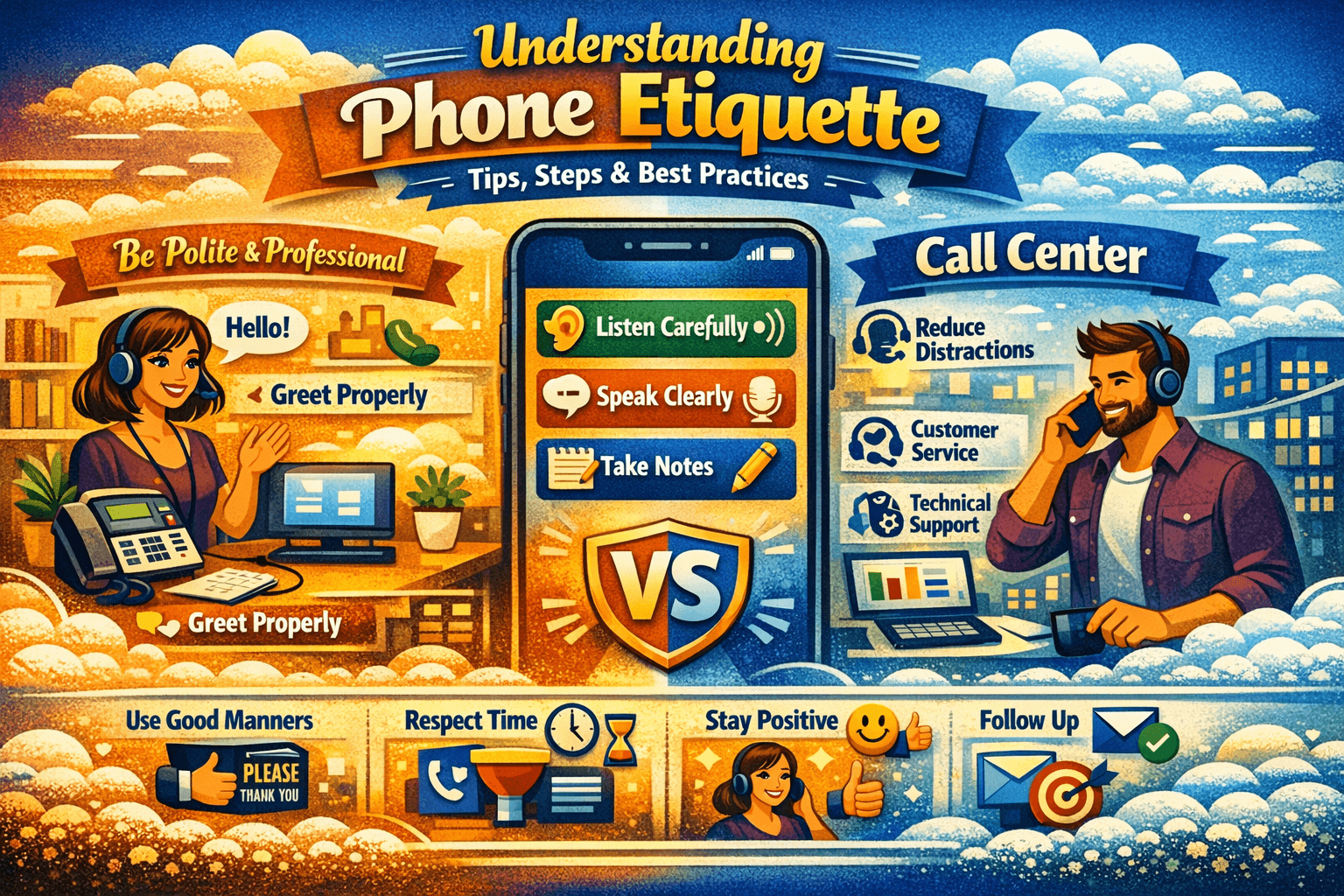
Introduction: The Importance of Phone Etiquette
In a world where digital communication channels multiply every day, the telephone remains one of the most direct and influential methods of connection. Since its invention in 1876 by Alexander Graham Bell, the telephone transformed how individuals and organizations communicate — turning scattered written letters into real‑time conversations. From its early days in business switchboards to today’s mobile and VoIP networks, phone communication continues to be vital across cultures, industries, and contexts.
But with this influence comes responsibility: the way someone speaks on the phone — their tone, clarity, respect, and attentiveness — deeply impacts outcomes. Whether taking a customer service call, conversing with friends, or setting appointments, effective phone etiquette can build trust, reduce misunderstandings, and leave lasting impressions.
Why Phone Etiquette Matters Today
In business, poor phone etiquette can result in lost sales, frustrated customers, or damaged reputation. In personal calls, it can cause miscommunication, tension, or offense. With remote work increasing, phone communication often becomes the primary way teams stay connected — making etiquette not just polite, but strategic.
Historical Context
In the early 20th century, phone operators acted as human routers — connecting calls and managing communication flow. With professional switchboards came professional expectations: clear speech, timely response, and courteous conduct. As technology evolved, so did expectations. Today’s phone etiquette blends traditional courtesy with modern communication skills, requiring adaptability, empathy, and clarity in every conversation.
In this guide, we explore what phone etiquette is, why it’s important, how it works step by step, practical examples, benefits, and answers to your most common questions.
What Is Phone Etiquette?
Phone etiquette refers to the set of rules and practices that govern respectful, clear, and effective telephone communication. It includes how you answer the phone, your tone of voice, choice of words, listening skills, responsiveness, and how you close a conversation.
Phone etiquette isn’t just about being polite — it’s about creating positive communication outcomes, preventing misunderstandings, and fostering trust.
Key Elements of Phone Etiquette
Phone etiquette is composed of several foundational elements:
1. Professional Greeting
A confident, friendly introduction sets the tone. This includes stating your name and purpose clearly. For example:
“Good morning, this is Maria from ABC Solutions. How may I help you today?”
2. Tone of Voice
Tone conveys attitude more than words. Even when stressed, a calm and clear tone builds rapport.
3. Active Listening
Proper etiquette requires listening fully — without interrupting — and acknowledging the speaker.
4. Empathy and Patience
Especially on difficult calls, remaining patient and empathizing with the caller creates better outcomes.
5. Clear, Concise Responses
Avoid jargon, speak at moderate pace, and organize your thoughts before responding.
6. Polite Closing
Effective phone etiquette includes ending calls politely. For example:
“Thank you for calling. Have a great day!”
Step‑by‑Step Guide to Mastering Phone Etiquette
Step 1 — Before You Answer
Proper preparation leads to confident communication.
✔ Eliminate Distractions
Ensure your environment is quiet and focused.
✔ Know Your Purpose
If it’s a work call, prepare necessary information or tools before answering.
✔ Check Your Mood
Voice reflects mood. Take a breath before taking calls after stressful tasks.
Step 2 — Answering the Call
First impressions matter.
📞 Best Practices
1. Answer Promptly
Listening to multiple rings may make callers assume they’re unimportant.
2. Use Professional Greeting
A structured greeting promotes clarity.
3. Smile Before Speaking
Smiling changes vocal tone — making you sound welcoming.
4. Introduce Yourself and Organization
This confirms whom callers reached and sets expectations.
Step 3 — Active Engagement
Use these skills throughout the conversation:
✔ Listen Fully
Avoid interruptions and let the other person finish speaking.
✔ Clarify When Needed
If unclear, ask questions such as:
“Just to make sure I understand, did you mean…?”
✔ Keep Pace Appropriate
Speak neither too fast nor too slow.
✔ Use Names When Possible
Addressing someone by name builds connection.
Step 4 — Handling Difficult Calls
Not all calls are smooth. Phone etiquette helps manage challenging conversations.
⚠ Common Scenarios
- Angry or frustrated callers
- Misunderstood requests
- Repetitive explanations
✔ Best Practices
Stay Calm: Don’t mirror negativity.
Rephrase for Clarity: Reflect back what the caller said.
Offer Solutions: Even if you can’t solve it immediately, communicate willingness.
Example:
“I understand this issue has caused frustration. Here’s what I can do to help…”
Step 5 — Ending the Call Professionally
A structured closing leaves a strong impression.
✔ Summarize Key Points
Review actions or next steps.
✔ Confirm Next Steps
If promises were made, be clear on timelines.
✔ Provide Closing Courtesy
Expressions such as “Thank you” and “Have a good day” signal positivity.
Examples of Good Phone Etiquette
Example 1 — In Customer Service
A retail customer calls about a delayed order:
Employee uses:
- Calm tone
- Acknowledges frustration
- Provides clear solutions
- Offers next steps
The customer feels heard and respected — even if the issue isn’t immediately resolved.
Example 2 — In Professional Meetings
A project coordinator answers a vendor call:
Coordinator:
- Greets with full name and company
- Actively listens
- Takes accurate notes
- Confirms follow‑up schedule
Result: Smooth collaboration and fewer follow‑up clarifications.
Benefits of Practicing Proper Phone Etiquette
Let’s explore in detail how mastering etiquette impacts communication quality, reputation, and results.
Builds Strong First Impressions
First impressions in phone communication influence trust and satisfaction — especially in business.
Reduces Miscommunication
Using clear language and active listening reduces errors and rework.
Enhances Professional Reputation
People naturally associate good communication with competence.
Improves Relationships
Politeness and respect foster stronger personal and professional connections.
Improves Customer Satisfaction and Loyalty
Customers who feel understood are more likely to stay loyal.
Phone Etiquette in Different Contexts
Phone etiquette changes slightly depending on context. Below are examples:
🏢 Business Calls
In business settings, etiquette emphasizes professionalism, efficiency, and consistency. This includes standardized greetings, appropriate hold times, and managerial escalation protocols.
❤️ Personal Calls
While more casual, personal calls still benefit from respectful listening, no interruptions, and clear communication — especially on emotionally charged matters.
📅 Appointment‑Based Calls
When scheduling medical or professional appointments, accuracy in spelling names, times, and details is critical to avoid confusion.
🛠 Support and Service Calls
When responding to technical or troubleshooting calls, patience and structured problem‑solving are crucial. Providing clear steps and confirmations reduces follow‑up calls.
Common Phone Mistakes and How to Correct Them
Below is a comparison table of frequent phone habits that weaken communication — and how to improve them:
| Poor Practice | Impact | Better Alternative |
|---|---|---|
| Answering with “Hello?” | Sounds unprepared | Structured greeting |
| Interrupting caller | Miscommunication | Active listening |
| Speaking too fast | Hard to follow | Moderate pace |
| Using slang/jargon | Confusion | Clear vocabulary |
| Ending abruptly | Rude impression | Polite closing |
| Multitasking | Missed details | Focused attention |
Frequently Asked Questions (FAQs)
❓ Q1: What is phone etiquette in simple terms?
Phone etiquette means being respectful, clear, and professional when speaking on the phone — including tone, active listening, and proper greetings and closures.
❓ Q2: Why is phone etiquette important at work?
It ensures professional image, reduces misunderstandings, improves customer satisfaction, and strengthens communication standards across teams.
❓ Q3: How can I improve my phone etiquette quickly?
Practice active listening, use structured greetings, speak clearly, and consciously avoid interruptions or negative fillers.
❓ Q4: What are the basic rules of phone etiquette?
Answer promptly, greet professionally, listen actively, respond clearly, handle challenges calmly, and close politely.
❓ Q5: Can phone etiquette affect customer loyalty?
Yes — callers who feel heard and respected are more likely to trust and remain loyal to a service or brand.
❓ Q6: Should phone etiquette differ in personal vs business calls?
Professional standards apply in business contexts, while personal calls may be more informal — but respect, listening, and clarity are always beneficial.
❓ Q7: How do I handle rude callers politely?
Stay calm, don’t mirror negativity, acknowledge their feelings, and professionally redirect the conversation toward solutions.
Final Thoughts
Phone etiquette isn’t an outdated concept — it’s an essential communication skill that influences relationships, impressions, and outcomes every time a conversation takes place.
Whether you’re a professional handling clients, a student calling for information, or someone connecting with friends or colleagues, mastering phone etiquette elevates your communication effectiveness.
This guide provided structured steps, practical examples, communication benefits, context‑specific tips, and a deep FAQ section to help you understand and practice phone etiquette confidently.

